













Welcome to our store
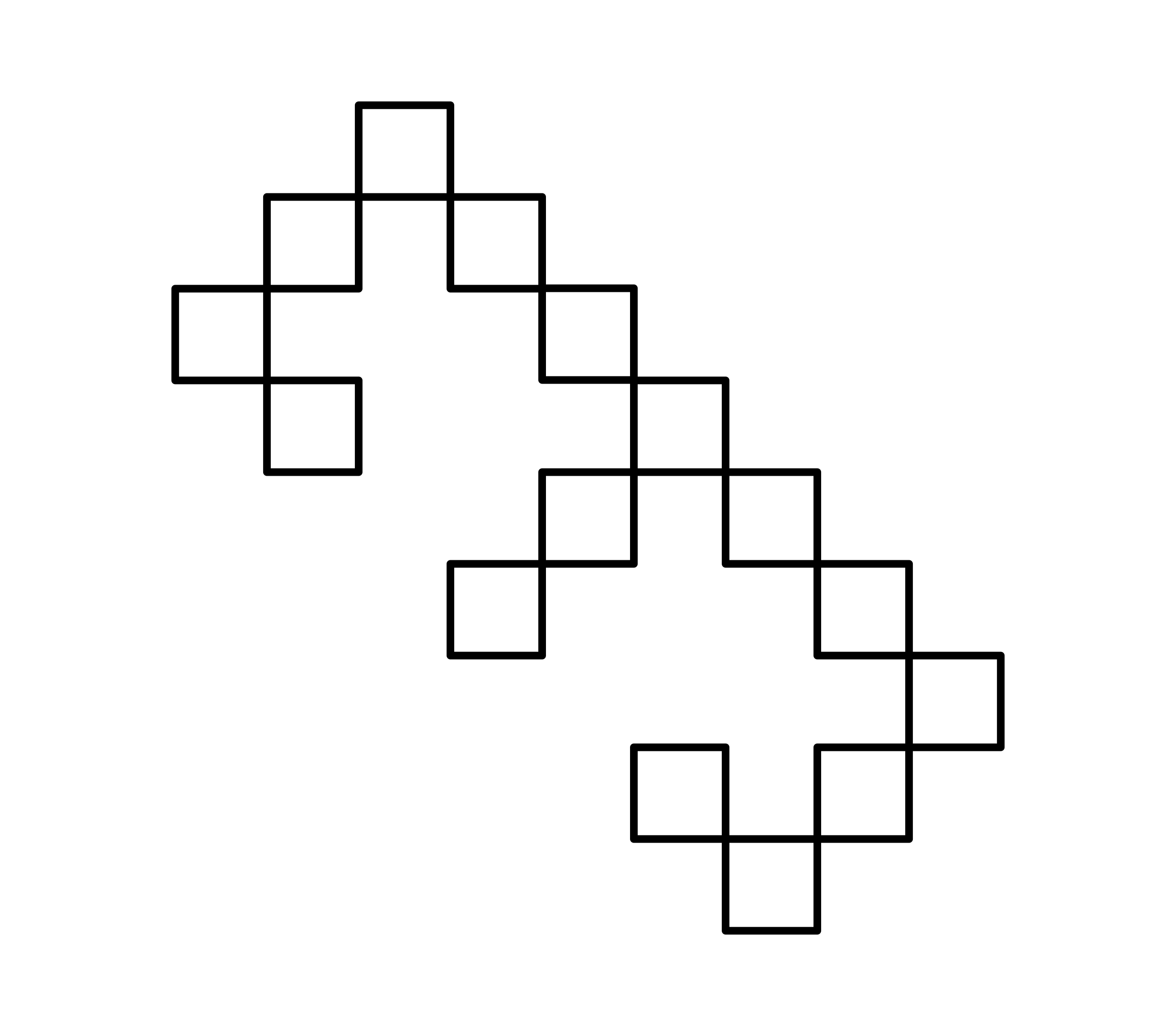
London System signature position rendered as generative art

D02

London System

Solid, repeatable, low memorization — the same setup against almost anything Black plays.

TLDR

  • • A highly solid, system-based opening for White that does not require memorizing complex, theoretical lines.
  • • Develops the dark-squared bishop outside the pawn chain before locking the center with solid support.
  • • Creates a signature pyramid pawn structure that provides an incredibly tough defensive shell.
  • • Perfect for players who prefer plans, understanding, and positional safety over sharp, tactical traps.

Opening

London System

Solid, repeatable, low memorization — the same setup against almost anything Black plays.

Starting position

Starting Position

Every game begins here.

Tip: use and to navigate

Move sequences and interactive tour paths for London System

The London System

  • Starting Position - Every game begins here.
  • 1. d4: Queen's Pawn Opening - White claims the center, establishing the foundation for the London System.
  • 1... d5: Symmetric Response - Black mirrors, contesting the center directly.
  • 2. Bf4: The London Bishop - The defining move. White develops the dark-squared bishop actively before locking it behind pawns.
  • 2... Nf6: Black Develops - Black develops a knight, preparing to castle and control key central squares.
  • 3. e3: Solidifying the Structure - White pushes the e-pawn, supporting the center and opening paths for the light-squared bishop.
  • 3... c5: Challenging White's Center - Black strikes at White's d4 pawn, testing the stability of White's setup.
  • 4. c3: The Pyramid Structure - White reinforces the center, creating the signature pyramid pawn structure of the London.
  • 4... Nc6: Developing the Knight - Black develops the knight to add pressure to White's center pawn.
  • 5. Nd2: Supporting the Knights - White develops the knight to d2, supporting the f3 knight and reinforcing the center.

Want to put it into practice?

Test your tactics on today's Control The Center puzzle.

Play today's puzzle →

The Idea

The London System is one of the most popular and practical openings in chess. Unlike theory-heavy lines that require players to memorize dozens of moves, the London is a system. This means White aims for a specific, solid setup of pieces and pawns that remains virtually identical regardless of how Black chooses to respond.

The defining feature of the London System is the placement of White’s dark-squared bishop. In many queen’s pawn openings, this bishop gets trapped behind a wall of pawns on the kingside. In the London, White develops this bishop to an active post before pushing the e-pawn to lock the center. This ensures the bishop remains a potent attacking weapon throughout the game.

Once the bishop is developed, White constructs a rock-solid pyramid pawn structure. This structure is incredibly difficult for Black to break through, providing White with a safe, solid position from which to plan their middlegame. Typically, White will seek to control the central outpost squares and build an attack against Black’s king.

Perfect for players who prefer to win through strategic planning, positional understanding, and patience, the London System has been embraced by players of all levels, including World Champion Magnus Carlsen. It is a reliable, robust opening that guarantees a playable, strategic game.

Famous Games

Kamsky, Gata vs Shankland, Samuel

US Championship, 2014

Gata Kamsky, the modern patron saint of the London System, showcases how to build a slow, positional, and eventual winning dark-square squeeze against a resilient opponent.

PGN Game Record for Kamsky, Gata vs Shankland, Samuel
[Event "US Championship"]
[Site "St. Louis, MO USA"]
[Date "2014.05.13"]
[Round "5"]
[White "Kamsky, Gata"]
[Black "Shankland, Samuel"]
[Result "1-0"]

1. d4 d5 2. Bf4 Nf6 3. e3 c5 4. c3 Nc6 5. Nd2 e6 6. Ngf3 Bd6 7. Bg3 O-O 8. Bd3 Qe7 9. Ne5 Nd7 10. Nxd7 Bxd7 11. Bxd6 Qxd6 12. dxc5 Qxc5 13. Bxh7+ Kxh7 14. Qh5+ Kg8 15. Ne4 Qc4 16. Ng5 Rfd8 17. Qxf7+ Kh8 18. Qh5+ Kg8 19. Rd1 e5 20. Qf7+ Kh8 21. e4 Be8 22. Qf8# 1-0