










Welcome to our store
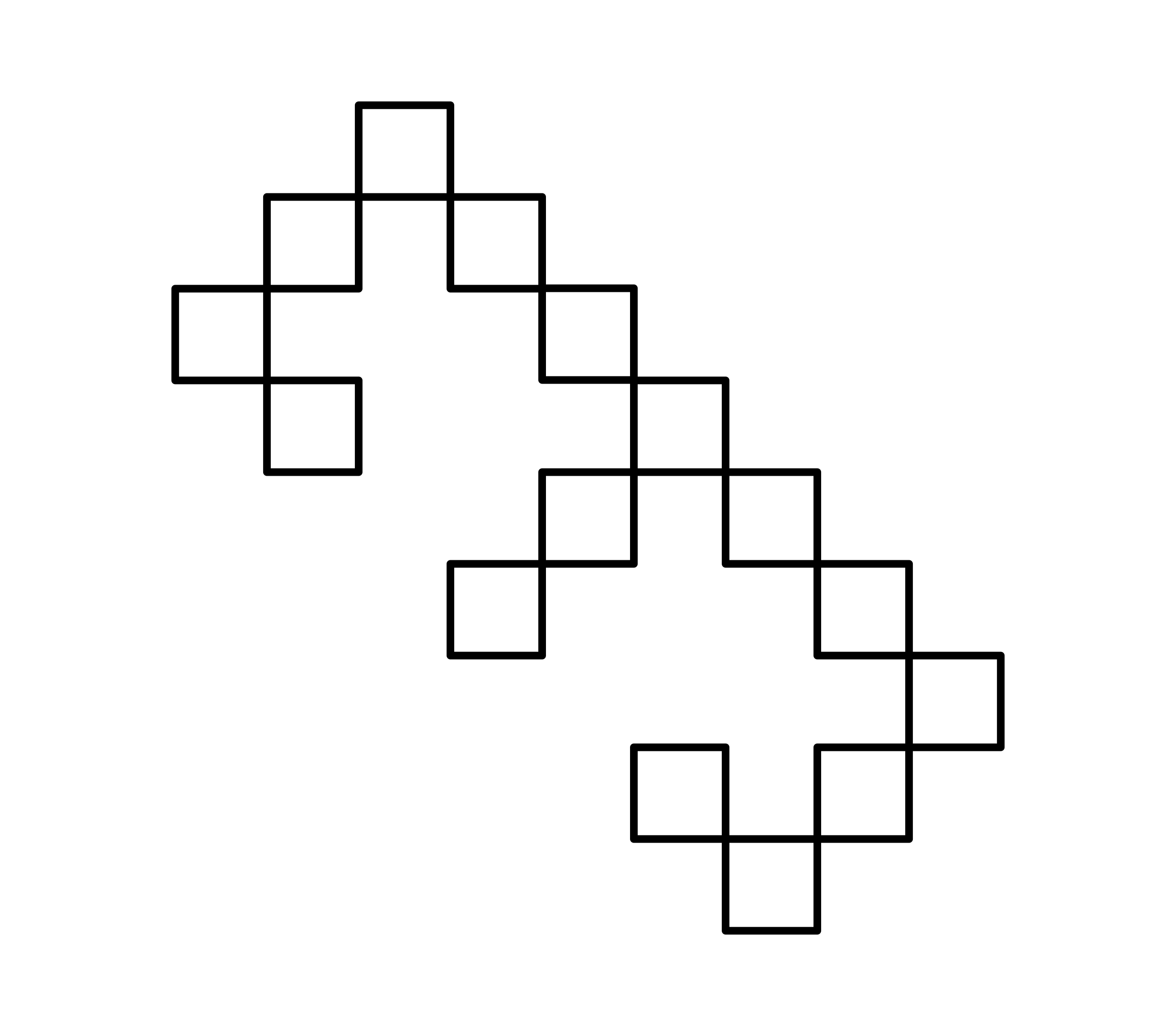
Slav Defense signature position rendered as generative art

D10–D19

Slav Defense

Support the center with a flank pawn without trapping the bishop.

TLDR

  • • Declines the Queen's Gambit by supporting the central pawn with a second pawn on the flank.
  • • Avoids trapping the light-squared queen's bishop, which remains free to develop actively.
  • • Creates a highly solid and resilient pawn structure that is exceptionally difficult to break.
  • • One of the most trusted and popular defenses at the grandmaster level for its reliability.

Opening

Slav Defense

Support the center with a flank pawn without trapping the bishop.

Starting position

Starting Position

Every game begins here.

Tip: use and to navigate

Move sequences and interactive tour paths for Slav Defense

The Slav Defense

  • Starting Position - Every game begins here.
  • 1. d4: Queen's Pawn Opening - White claims the dark center, preparing a strategic struggle.
  • 1... d5: Symmetric Response - Black mirrors the move, contesting the center directly.
  • 2. c4: The Queen's Gambit Offered - White offers the c-pawn, challenging Black's central setup.
  • 2... c6: The Slav Defense - Black declines the gambit, supporting the central pawn with the c-pawn to keep the light-squared bishop free.
  • 3. Nf3: Developing the Knight - White develops the knight, reinforcing the center and preparing options.
  • 3... Nf6: Developing the Kingside Knight - Black develops the knight, preparing to castle and adding control to key squares.
  • 4. Nc3: Queen's Knight Develops - White develops the second knight, adding pressure to Black's central structure.
  • 4... dxc4: Capturing the Pawn - Black captures the c-pawn, challenging White to show how they will recover the material.
  • 5. a4: Stopping the Advance - White pushes the a-pawn to prevent Black from supporting the captured pawn with a flank pawn advance.
  • 5... Bf5: Developing the Bishop - Black develops the light-squared bishop outside the pawn chain, completing the core strategic goal of the Slav.

Want to put it into practice?

Test your tactics on today's Control The Center puzzle.

Play today's puzzle →

The Idea

The Slav Defense is one of the most reliable and popular replies to the Queen’s Gambit. When White offers the flank pawn to gain central space, Black faces a dilemma: how to defend the central pawn without trapping the light-squared bishop. The classical Declined variation solves the defense but blocks the bishop. The Slav Defense solves both problems.

By supporting the center with the c-pawn, Black keeps the diagonal open for the light-squared bishop. This allows Black to develop the bishop outside the pawn structure before closing the wall. The result is a rock-solid pawn skeleton that is exceptionally resilient.

White will often try to combat this setup by claiming a space advantage or attacking the queenside squares that Black’s bishop has vacated. This leads to deep, maneuvering games where understanding the pawn breaks and maintaining piece coordination is essential.

Trusted by World Champions like Garry Kasparov, Vladimir Kramnik, and Viswanathan Anand, the Slav Defense is a cornerstone of grandmaster-level chess. It offers Black a solid path to equality and a playable, strategic middlegame where structural integrity is key.

Famous Games

Bernstein, Ossip vs Capablanca, Jose Raul

St. Petersburg, 1914

Capablanca showcases the rock-solid nature of the Slav Defense structure before executing a stunning tactical combination with a back-rank threat.

PGN Game Record for Bernstein, Ossip vs Capablanca, Jose Raul
[Event "St. Petersburg"]
[Site "St. Petersburg RUE"]
[Date "1914.04.28"]
[Round "7"]
[White "Bernstein, Ossip"]
[Black "Capablanca, Jose Raul"]
[Result "0-1"]

1. d4 d5 2. c4 e6 3. Nc3 Nf6 4. Nf3 Be7 5. Bg5 O-O 6. e3 Nbd7 7. Rc1 b6 8. cxd5 exd5 9. Qa4 Bb7 10. Ba6 Bxa6 11. Qxa6 c5 12. Bxf6 Nxf6 13. dxc5 bxc5 14. O-O Qb6 15. Qe2 c4 16. Rfd1 Rd8 17. Nd4 Bb4 18. b3 Rac8 19. bxc4 Rxc4 20. Nxd5 Rxc1 21. Nxb6 Rxd1+ 22. Qxd1 axb6 23. Qa4 Bc5 24. Nc6 Re8 25. Nb4 Re4 26. Qa8+ Re8 27. Qa4 Re4 28. a3 h6 29. Qa8+ Re8 30. Qc6 Re6 31. Qc8+ Re8 32. Qb7 Bxb4 33. axb4 Re6 34. h3 g6 35. b5 Kg7 36. g4 g5 37. Kg2 Kg6 38. f4 gxf4 39. exf4 Rd6 40. Qb8 Rd2+ 41. Kf3 Rd3+ 42. Ke2 Rxh3 43. Qxb6 Kg7 44. Qd4 Kg6 45. b6 Rb3 46. g5 hxg5 47. fxg5 Nh5 48. Qd6+ Kg7 49. Qh6+ Kg8 50. Qxh5 Rxb6 51. Kf3 Rg6 52. Kf4 Kg7 53. Kf5 Kg8 54. Qxg6+ fxg6+ 55. Kxg6 0-1