





The Knight in Chess
The tactical trickster. The only piece that can jump over other pieces, specializing in forks, outposts, and closed positions.
Physical Description & Anatomy
The most intricate piece in any hand-carved chess set. Modeled after the horses of the Parthenon Frieze in classical Greek sculpture, the knight features a carved horse head with detailed mane ridges, flared nostrils, and alert ears mounted on a sturdy circular base. It is the only non-symmetrical, hand-sculpted piece.
Movement Rules & Strategic Value
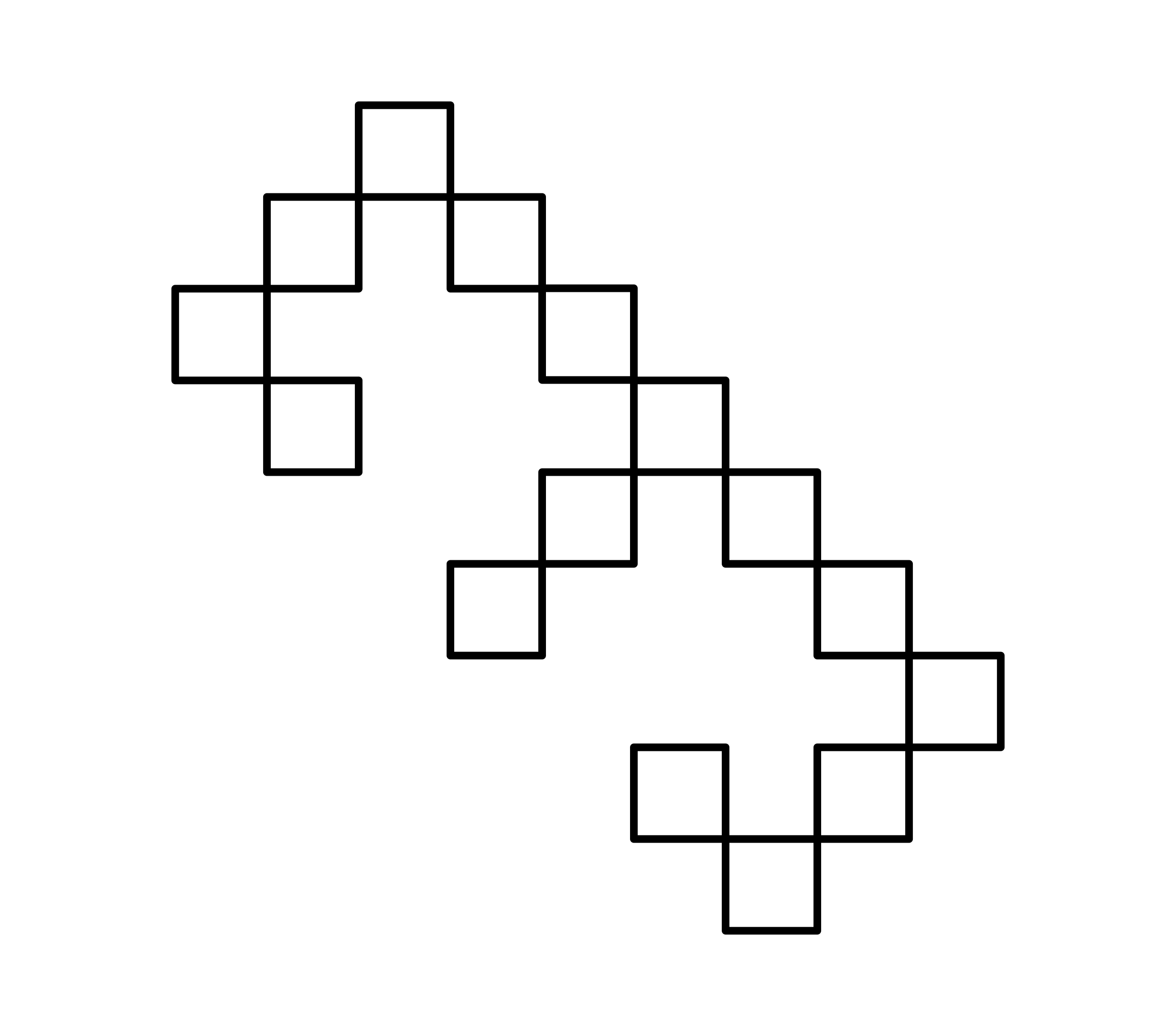
Moves in an L-shape: two squares in one cardinal direction, then one square perpendicular. Can hop over friendly and enemy pieces.
Knights thrive in cramped positions where long diagonals and open files are blocked. Their unique L-shaped jump makes them lethal for double-attack forks against kings and queens.
All Knights Casualty & Lifespan Analytics
In Master play, pieces survive ~3 plies longer due to prophylactic defense and endgame conversions.
Frequently Asked Questions (Knight)
How does the knight move in chess?
The knight moves in an "L-shape": two squares in one cardinal direction and then one square perpendicular. It is worth 3 points.
Can a knight jump over other pieces in chess?
Yes! The knight is the ONLY piece on the chessboard that can jump over both friendly and enemy pieces.
What is a knight fork in chess?
A knight fork is a tactical double attack where a knight simultaneously threatens two or more enemy pieces (such as the king and queen), often winning material.
Individual Knight Guides (4 Starting Pieces)
White's queenside workhorse. Develops to c3 to command d5 and e4, or to d2 in solid pawn setups, preparing active queenside attacks and knight outpost jumps.
White's primary kingside defender and attacker. Almost always develops to f3 to attack e5, guard the king, and control central space in opening theory.
Black's queenside knight. Develops to c6 to contest d4 and e5, or d7 in solid setup lines, putting crucial counter-pressure on White's central outposts.
Black's primary defensive knight. Develops to f6 in almost every main-line defense against 1.e4 and 1.d4 to attack e4 and build a resilient kingside fortress.