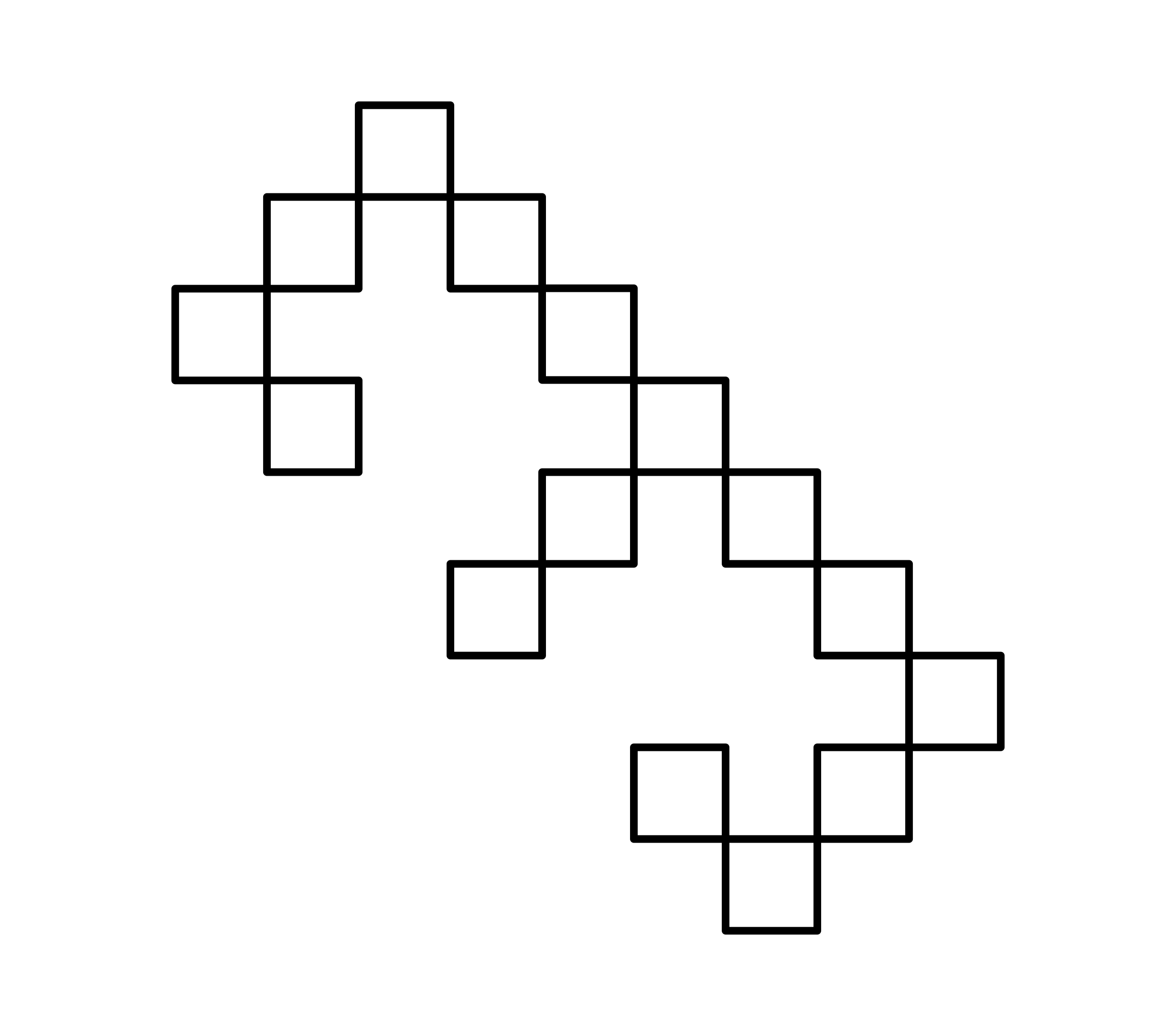









The Bishop (valued at 3 points) is a long-range tactical sniper in chess. Moving smoothly along diagonals, a Bishop can influence squares from one corner of the board all the way to the other in a single move.
Because diagonals consist entirely of alternating colors, a Bishop is permanently confined to the color of the square on which it began the game.
Diagonal Flight & Color Lock
Each player begins the game with two Bishops:
- The Light-Squared Bishop: Starts on
f1(White) orc8(Black) and patrols only the 32 light squares. - The Dark-Squared Bishop: Starts on
c1(White) orf8(Black) and patrols only the 32 dark squares.
Bishops cannot jump over pieces. If a friendly piece blocks the diagonal, the Bishop must stop before it; if an enemy piece blocks the diagonal, the Bishop may capture that piece and stop on that square.
Good vs. Bad Bishops
Because a Bishop is locked to a single color complex, the placement of your own pawns determines its power:
- Active / Good Bishop: Friendly pawns are placed on the opposite color of your Bishop, leaving the diagonals open and free for the Bishop to attack deep into enemy territory.
- Passive / Bad Bishop: Friendly pawns are locked on the same color as the Bishop, acting as permanent roadblocks that paralyze the Bishop into a glorified tall pawn.
The Bishop Pair Advantage
When you possess both Bishops, they complement each other flawlessly—one controls all 32 light squares, while the other dominates all 32 dark squares. In open positions with few central pawns, the Bishop Pair is often considered more valuable than a Knight + Bishop or two Knights.
For experienced players
Fianchettoing a Bishop (placing it on b2, g2, b7, or g7) places the Bishop on the longest diagonals on the board (a1-h8 and h1-a8), exerting immense central pressure.
See also:How the Knight Moves·Skewer·Pin