












Welcome to our store
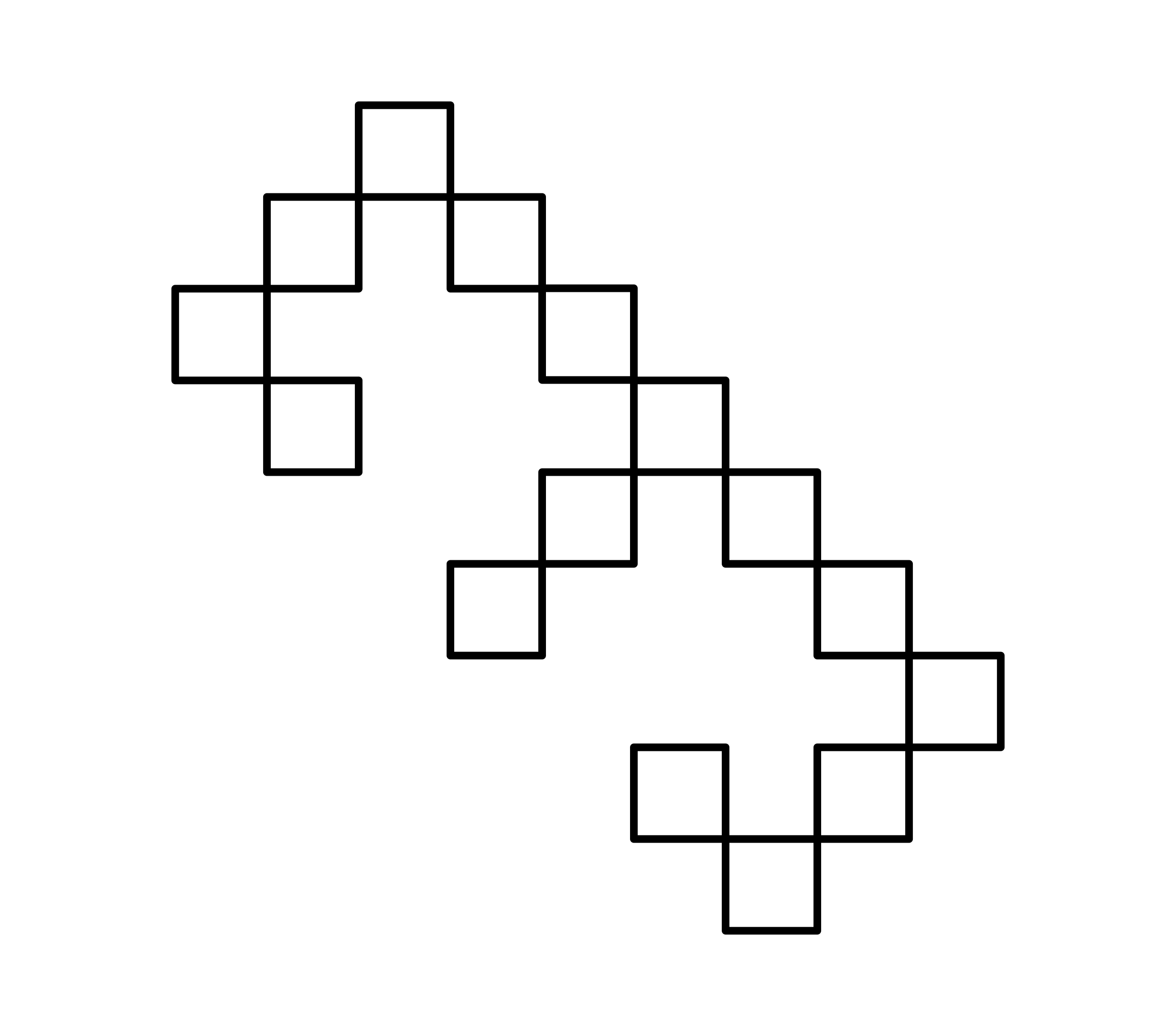
Catalan Opening signature position rendered as generative art

E00–E09

Catalan Opening

Queen's Gambit meets Reti — a fianchettoed bishop exerting long-range pressure on the queenside.

TLDR

  • • Combines the queenside space-grabbing of the Queen's Gambit with the kingside fianchetto of the Reti.
  • • Fires White's light-squared bishop down the long diagonal to pressure Black's queenside assets.
  • • Favored by elite grandmasters for generating quiet, low-risk positional pressure that slowly chokes the opponent.
  • • Divides into open and closed lines based on whether Black captures the flank pawn early or defends the center.

Opening

Catalan Opening

Queen's Gambit meets Reti — a fianchettoed bishop exerting long-range pressure on the queenside.

Starting position

Starting Position

Every game begins here. White's first decision sets the entire shape of the game ahead.

Tip: use and to navigate

Move sequences and interactive tour paths for Catalan Opening

The Catalan Opening

  • Starting Position - Every game begins here. White's first decision sets the entire shape of the game ahead.
  • 1. d4: Queen's Pawn Opening - White claims the dark center, signaling a strategic, slower game.
  • 1... Nf6: Indian Defense - Black develops a knight instead of mirroring with a central pawn — flexible, modern, refusing to commit too early.
  • 2. c4: English-Style Flank - White stakes a claim on the queenside light squares before fully committing the rest of the structure.
  • 2... e6: Preparing Development - Black quietly prepares to develop the kingside bishop and castle, declining to fight in the center yet.
  • 3. g3: The Catalan Idea - The defining move. White prepares to fianchetto the light-squared bishop on the longest diagonal, where it will pressure Black's queenside for the entire game.
  • 3... d5: Challenging the Center - Black strikes at the d4 pawn, challenging White to clarify the central structure before completing development.
  • 4. Bg2: Fianchettoing the Bishop - White completes the bishop placement. The sniper is now aimed down the main board diagonal, targeting the queenside squares.
  • 4... dxc4: Open Catalan - Black captures the flank pawn, attempting to lure White's forces away from the center in exchange for queenside pawn structure.
  • 5. Nf3: Developing the Knight - White develops the king's knight, preparing to castle and preparing future recaptures of the advanced c4 pawn.
  • 5... Be7: Black Develops the Bishop - Black prepares to castle the king to safety while keeping a watchful eye on White's potential central thrusts.
  • 6. O-O: White Castles - White places the king in safety. The game will revolve around White's efforts to regain the c4 pawn and maintain central supremacy.
  • 4... Be7: Closed Catalan - Black keeps the structure solid, choosing development and safety over early pawn grabbing.
  • 5. Nf3: Defending the Center - White develops the knight, reinforcing the center and preparing to castle.
  • 5... O-O: Black Castles - Black tucks the king away in safety. The center remains tense and closed, promising a deep maneuvering battle.
  • 6. O-O: White Castles - Both kings are safe. White will seek to maintain pressure using the g2 bishop, while Black looks to equalize by breaking open the center later.

Want to put it into practice?

Test your tactics on today's Control The Center puzzle.

Play today's puzzle →

The Idea

The Catalan Opening represents a sophisticated marriage of classical central control and modern flank pressure. Developed in the late nineteen-twenties by Savielly Tartakower for a tournament in Barcelona, this opening has grown into one of the most respected systems at the grandmaster level. It is characterized by White pushing the queen’s pawn and the queen’s bishop’s pawn forward, but choosing to place the king’s bishop on the long kingside diagonal rather than in the center.

This fianchettoed bishop is the true hero of the Catalan. From its defensive post on the kingside, it acts as a long-range sniper, pointing directly through the center toward Black’s queenside rook and bishop. Even if Black tries to capture and hold White’s offered gambit pawn on the queenside, the pressure from this bishop makes defending the extra material a harrowing chore.

Historically, the Catalan is split into two major branches. In the Open Catalan, Black chooses to capture the c-pawn early, opting for active piece play in exchange for giving White central dominance. In the Closed Catalan, Black declines the capture, choosing to reinforce the center and accept a slightly passive, defensive posture.

World Champions like Vladimir Kramnik and Garry Kasparov championed the Catalan because it rarely leads to forced tactical defeats. Instead, it offers White a low-risk, long-term positional advantage. If you enjoy a slow, squeezing game where you gradually restrict your opponent’s options and slowly dismantle their position, the Catalan is a magnificent weapon.

Famous Games

Vladimir Kramnik vs Viswanathan Anand

Corus, 2007

Vladimir Kramnik uses the Catalan Opening's trademark long-range light-squared bishop pressure to restrict and slowly choke Anand's pieces.

PGN Game Record for Vladimir Kramnik vs Viswanathan Anand
[Event "Corus"]
[Site "Wijk aan Zee NED"]
[Date "2007.01.16"]
[Round "3"]
[White "Kramnik, Vladimir"]
[Black "Anand, Viswanathan"]
[Result "1-0"]

1. d4 Nf6 2. c4 e6 3. g3 d5 4. Bg2 Be7 5. Nf3 O-O 6. O-O dxc4 7. Qc2 a6 8. Qxc4 b5 9. Qc2 Bb7 10. Bd2 Ra7 11. Rc1 Be4 12. Qb3 Nc6 13. e3 Qa8 14. Qd1 Nd8 15. Ba5 Qb8 16. Nbd2 Ba8 17. Nb3 Nb7 18. Bxc7 1-0