




The Rook in Chess
The heavy artillery. Rooks command open files, double up on ranks, and execute deadly 7th-rank invasions in the endgame.
Physical Description & Anatomy
A sturdy, cylindrical piece sculpted to resemble a medieval castle tower or turret (also known as a castle). Features four or five crenellated battlements (merlons and embrasures) crowning a solid, vertical wall structure anchored by a wide, heavy circular base.
Movement Rules & Strategic Value
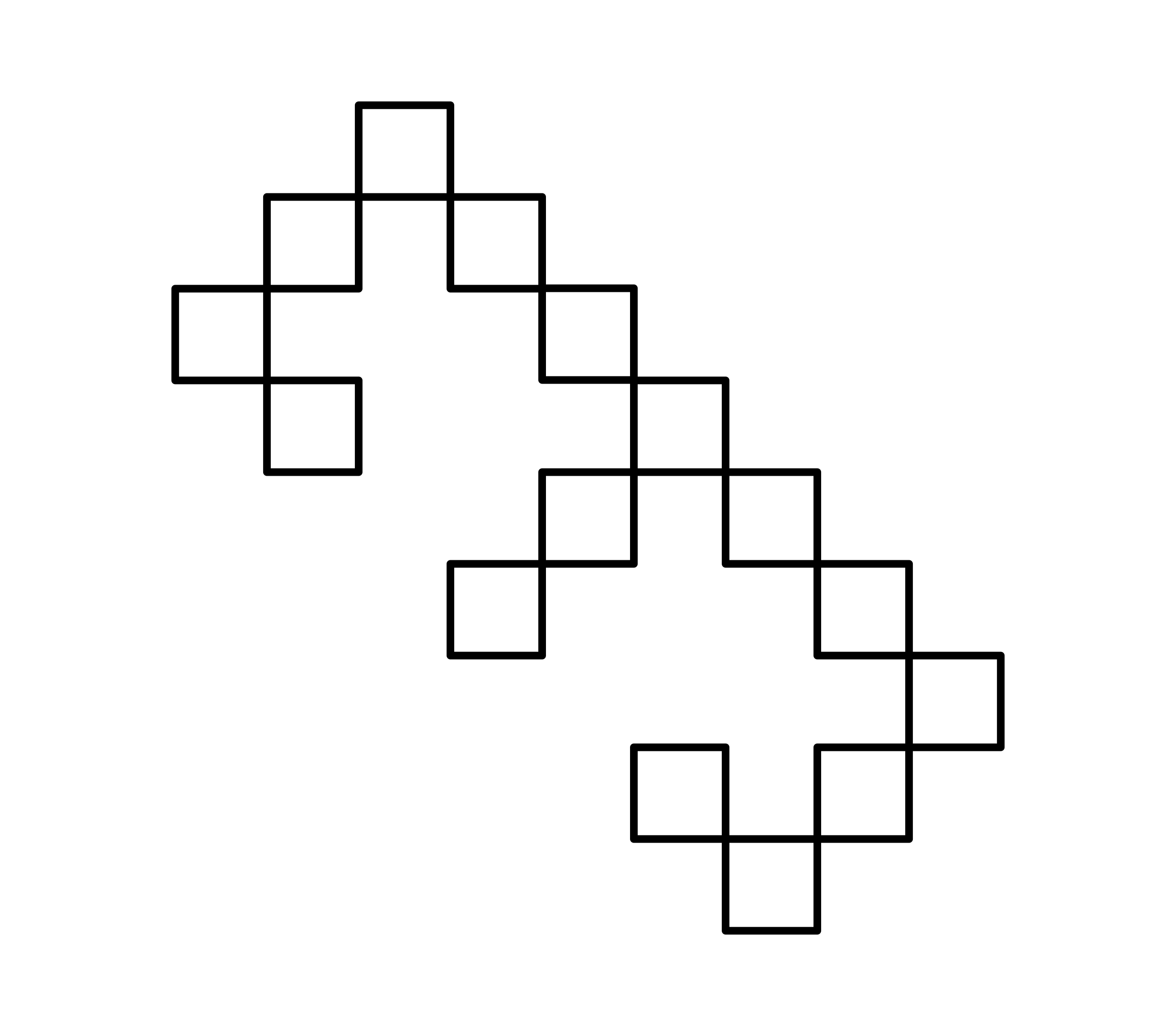
Moves any number of unoccupied squares horizontally along ranks or vertically along files.
Rooks start tucked in the corners but become terrifying weapons once files open up. Doubled rooks on an open file or the 7th rank often guarantee victory.
All Rooks Casualty & Lifespan Analytics
In Master play, pieces survive ~6 plies longer due to prophylactic defense and endgame conversions.
Frequently Asked Questions (Rook)
How does the rook move in chess?
A rook moves any number of unoccupied squares horizontally along ranks or vertically along files. It is worth 5 points.
Why is a rook on the 7th rank so powerful?
A rook on the 7th rank (2nd rank for Black) attacks the opponent's pawns at their starting base and traps the enemy king on the back rank.
Can a rook jump over other pieces?
No, rooks cannot jump over pieces. They require open files or ranks to operate effectively.
Individual Rook Guides (4 Starting Pieces)
The white queenside rook starting on a1. Activates on open files, supports queenside castling, and executes lethal 7th-rank infiltrations in tactical chess.
The white kingside rook starting on h1. Slides to central files after kingside castling, creating heavy piece batteries and kingside mating nets in games.
The black queenside rook starting on a8. Activates on open files, supports queenside castling, and executes lethal 7th-rank infiltrations in tactical chess.
The black kingside rook starting on h8. Slides to central files after kingside castling, creating heavy piece batteries and kingside mating nets in games.