Vote on Drop 002 Ballot — Lock in 32% Off
Control The Center
gambit intermediate dubious For black

Rousseau Gambit

C50 Verified with Stockfish 18

Meet White's Italian Game with a shocking 3...f5!? counter-gambit to seize the f-file and ambush careless bishops.

Moves: 1. e4 e5 2. Nf3 Nc6 3. Bc4 f5
Plain English: 1. White's pawn e2 → e4 1... Black's pawn e7 → e5 2. White's knight g1 → f3 2... Black's knight b8 → c6 3. White's light-sq bishop f1 → c4 3... Black's pawn f7 → f5

Opening

Rousseau Gambit

Meet White's Italian Game with a shocking 3...f5!? counter-gambit to seize the f-file and ambush careless bishops.

Starting position
White to move. White: Pawn on a2, Pawn on b2, Pawn on c2, Pawn on d2, Pawn on e2, Pawn on f2, Pawn on g2, Pawn on h2, Rook on a1, Knight on b1, Bishop on c1, Queen on d1, King on e1, Bishop on f1, Knight on g1, Rook on h1. Black: Rook on a8, Knight on b8, Bishop on c8, Queen on d8, King on e8, Bishop on f8, Knight on g8, Rook on h8, Pawn on a7, Pawn on b7, Pawn on c7, Pawn on d7, Pawn on e7, Pawn on f7, Pawn on g7, Pawn on h7.
Up next: 1. e4 · King's Pawn
Step 0 / 12
Notation Speak

Starting position — click Next or press → to inspect algebraic notation.

WHAT JUST HAPPENED

Starting position — click Next or press → to step through each move in Plain English.

Opening OverviewStep 0 / 12

Starting Position

Black prepares to shock White's Italian Game with 3...f5!?.

Move History
Starting position
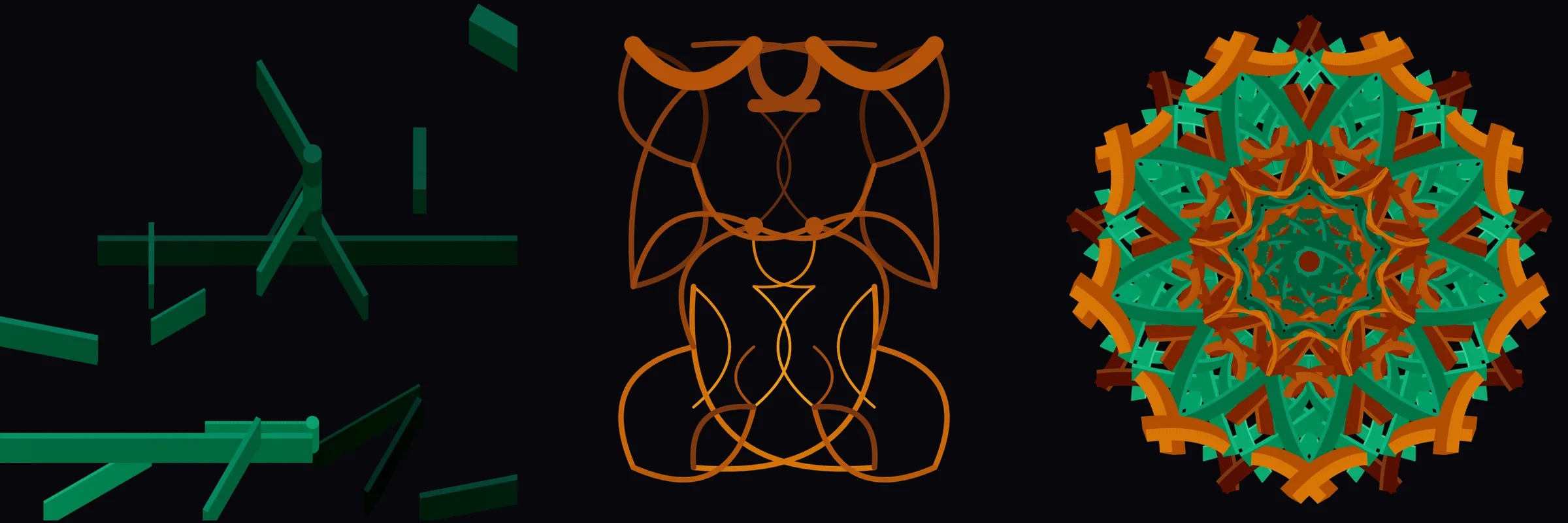
Collector Triptych PreviewECO C50
Rousseau Gambit 3-panel collector triptych

Tip: drag pieces directly on the board, use ← → arrow keys, L to switch move language, or F for Focus View

Gambit & Trap Trainer
Move-by-Move Notation & Plain-English Transcript (Rousseau Gambit) 2 Variations

1. Rousseau Gambit Accepted & The 4.Nc3? Fork Trap

  1. Start Starting Position

    Black prepares to shock White's Italian Game with 3...f5!?.

  2. 1. e4 Pawn to e4 King's Pawn

    White's pawn moves from e2 to e4.

    White opens 1.e4.

  3. 1... e5 Pawn to e5 Open Game

    Black's pawn moves from e7 to e5.

    Black matches in the center.

  4. 2. Nf3 Knight to f3 Attacking e5

    White's knight moves from g1 to f3.

    White develops the king's knight.

  5. 2... Nc6 Knight to c6 Defending e5

    Black's knight moves from b8 to c6.

    Black defends e5.

  6. 3. Bc4 Bishop to c4 The Italian Game (3.Bc4)

    White's light-squared bishop moves from f1 to c4.

    White develops the bishop to c4, expecting 3...Bc5 or 3...Nf6.

  7. 3... f5!? Pawn to f5 The Rousseau Gambit! (3...f5!?)

    Black's pawn moves from f7 to f5.

    Surprise! Black strikes at the e4-pawn with 3...f5!?, offering a flank gambit to seize the center and open the f-file.

  8. 4. exf5? e-pawn takes f5 Branch A: White Accepts (4.exf5?)

    White's pawn moves from e4 to f5, capturing Black's f5-pawn.

    The most common beginner mistake! White captures on f5, surrendering the center and exposing the f3-knight.

  9. 4... e4! Pawn to e4 Kicking the Knight (4...e4!)

    Black's pawn moves from e5 to e4.

    Black pushes 4...e4! with tempo! Because the c4-square is occupied by the bishop, White's f3-knight has no active central square.

  10. 5. Qe2 Queen to e2 White Tries to Pin e4 (5.Qe2)

    White's queen moves from d1 to e2.

    White plays 5.Qe2 to avoid retreating the knight to g1 right away.

  11. 5... Qe7! Queen to e7 Breaking the Pin (5...Qe7!)

    Black's queen moves from d8 to e7.

    Black matches with 5...Qe7!, renewing the threat to capture the f3-knight.

  12. 6. Ng1 Knight to g1 Humiliating Retreat (6.Ng1)

    White's knight moves from f3 to g1.

    White's knight is forced all the way back to its starting square on g1!

  13. 6... Nf6 Knight to f6 Black Dominates (+1.0 for Black)

    Black's knight moves from g8 to f6.

    Black develops 6...Nf6 (stopping Qh5+) and prepares 7...Nd4 and 8...d5, winning back the f5-pawn with an overwhelming lead in development.

  14. 4. Nc3? Knight to c3 Branch B: The Natural 4.Nc3? Blunder

    White's knight moves from b1 to c3.

    Many White players develop 4.Nc3? to defend e4, overlooking Black's central fork trick!

  15. 4... fxe4 f-pawn takes e4 Eliminating e4 (4...fxe4)

    Black's pawn moves from f5 to e4, capturing White's e4-pawn.

    Black captures on e4, luring White's knight to the e4 square.

  16. 5. Nxe4 Knight takes e4 White Recaptures (5.Nxe4)

    White's knight moves from c3 to e4, capturing Black's e4-pawn.

    White recaptures with the knight, placing two minor pieces on e4 and c4.

  17. 5... d5! Pawn to d5 The Central Fork! (5...d5!)

    Black's pawn moves from d7 to d5.

    Boom! 5...d5! forks the e4-knight and c4-bishop, recovering the piece immediately while seizing complete central dominance!

2. White's Refutation (4.d3! & 4.d4!)

  1. Start Starting Position

    Learn how Paul Morphy and Stockfish 18 punish the Rousseau Gambit.

  2. 1. e4 Pawn to e4 King's Pawn

    White's pawn moves from e2 to e4.

    White stakes out central space with 1.e4, opening lines for rapid kingside piece mobilization.

  3. 1... e5 Pawn to e5 Open Game

    Black's pawn moves from e7 to e5.

    Black mirrors in the center to contest d4 and keep open diagonals for both bishops.

  4. 2. Nf3 Knight to f3 Knight Out

    White's knight moves from g1 to f3.

    White develops the king's knight to attack e5 and prepare early castling.

  5. 2... Nc6 Knight to c6 Defending e5

    Black's knight moves from b8 to c6.

    Black protects the e5-pawn solidly while controlling the d4-square.

  6. 3. Bc4 Bishop to c4 Italian Bishop

    White's light-squared bishop moves from f1 to c4.

    White targets Black's f7-square along the a2-g8 diagonal, the exact line that will punish Black's upcoming ...f5 push if White avoids greed.

  7. 3... f5 Pawn to f5 Rousseau Gambit

    Black's pawn moves from f7 to f5.

    Black plays 3...f5!?.

  8. 4. d3! Pawn to d3 The Calm Refutation (4.d3!)

    White's pawn moves from d2 to d3.

    4.d3! is White's most reliable antidote. White refuses the bait, keeps e4 rock-solid, and locks the c4-bishop onto the weakened a2-g8 diagonal!

  9. 4... Nf6 Knight to f6 Black Develops (4...Nf6)

    Black's knight moves from g8 to f6.

    Black develops 4...Nf6 to guard h5 and fight for d5/e4.

  10. 5. Nc3 Knight to c3 Harmonious Development (5.Nc3)

    White's knight moves from b1 to c3.

    Now that d3 is played, 5.Nc3 is completely safe because ...fxe4 dxe4 gives White the open d-file and d5 outpost.

  11. 5... Bb4 Bishop to b4 Black Pins c3

    Black's dark-squared bishop moves from f8 to b4.

    Black plays 5...Bb4 to fight for e4.

  12. 6. Ng5! Knight to g5 Targeting f7 & e6 (6.Ng5!)

    White's knight moves from f3 to g5.

    6.Ng5! exploits Black's missing f7-pawn to threaten a royal fork on f7! White holds a clear +1.10 advantage.

Executive Summary (TL;DR)

  • • The Rousseau Gambit (1.e4 e5 2.Nf3 Nc6 3.Bc4 f5!?) is a fiery counter-gambit against the Italian Game, playing a reversed King's Gambit after White commits the bishop to c4.
  • • If White greedily accepts with 4.exf5?, Black pushes 4...e4! followed by 5...Nf6 and 6...d5, trapping or driving back White's f3-knight and c4-bishop with huge central control.
  • • Features the lethal 4.Nc3 fxe4 5.Nxe4 d5! fork trap, where Black recovers the piece with a dominant center.
  • • Refuted objectively by White's calm 4.d3! (+0.95 with Stockfish 18), declining the f5-pawn to keep the a2-g8 diagonal locked onto Black's king.
  • • First analyzed by Domenico Lorenzo Ponziani in 1769 and popularized by French-American master Eugène Rousseau in his 1845 New Orleans match against Charles Stanley.

The Idea

Direct Answer (Rousseau Gambit at a Glance):

  • Move Order: 1.e4 e5 2.Nf3 Nc6 3.Bc4 f5!? (ECO C50)
  • Historical Origin: First analyzed by Italian theorist Domenico Lorenzo Ponziani (1769); popularized by French-American master Eugène Rousseau in New Orleans in 1845.
  • Core Tactical Trap: If White accepts with 4.exf5?, Black pushes 4...e4! kicking the f3 knight backward, or if White plays 4.Nc3?, Black plays 4...fxe4 5.Nxe4 d5! forking knight and bishop.
  • White’s Stockfish 18 Refutation: White refutes the gambit with 4.d3! (+0.95) or 4.d4! (+0.90), declining the f5 pawn to exploit Black’s permanently weakened a2-g8 king diagonal.
MetricRousseau Gambit Specification
Opening ClassificationECO C50 — Italian Game, Rousseau Gambit (Ponziani Countergambit)
Signature Move Order1.e4 e5 2.Nf3 Nc6 3.Bc4 f5!?
Origin & PioneersDomenico Ponziani (1769) & Eugène Rousseau (1845)
Stockfish 18 Evaluation+0.95 for White (Depth 38 after 4.d3! Nf6 5.Nc3 or 4.d4!)
Human Blitz Win Rate53% Black Wins / 4% Draws / 43% White Wins (1000–1700 Elo)
Best White Refutation4.d3! (Positional Clamp) or 4.d4! exd4 5.e5! (Tactical Strike)

The Rousseau Gambit (1.e4 e5 2.Nf3 Nc6 3.Bc4 f5!?) is one of the most provocative counter-attacking weapons against the Italian Game. Instead of entering the heavily memorized main lines of the Giuoco Piano (3...Bc5) or Two Knights Defense (3...Nf6), Black plays a reversed King’s Gambit right on move three.

Why wait until move three (3.Bc4 f5!?) rather than playing the Latvian Gambit (1.e4 e5 2.Nf3 f5?!) on move two? Because once White commits the light-squared bishop to c4, two critical geometric factors change in Black’s favor:

  1. If White accepts with 4.exf5? e4!, the c4 square is blocked by White’s own bishop, depriving the f3 knight of escape squares and making ...d5 hit the bishop with tempo.
  2. If White develops carelessly with 4.Nc3?, Black liquidates with 4...fxe4 5.Nxe4 d5!, executing a central pawn fork against e4 and c4.
Variation / BranchMove SequenceStrategic Outcome
⚔️ Rousseau Accepted (4.exf5?)4.exf5? e4! 5.Qe2 Qe7! 6.Ng1 Nf6 7.Nc3 Nd4!Black -0.85 Edge — White’s knight is driven back to g1.
🪤 The 4.Nc3? Fork Trap4.Nc3? fxe4 5.Nxe4 d5! 6.Bb5 dxe4 7.Nxe5 Qd5!Black Wins Center / Piece — 5...d5! forks e4 and c4.
💣 The 4.Bxg8 Sideline4.Bxg8?! Rxg8 5.exf5 d5! 6.Nxe5 Nxe5 7.Qh5+ Nf7Sharp Unbalanced Fight — Black gets the bishop pair + open g-file.
🛡️ Ponziani Refutation (4.d3!)4.d3! Nf6 5.Nc3 Bb4 6.O-O Bxc3 7.bxc3 fxe4 8.dxe4White +0.95 Advantage — Black cannot castle kingside (Bc4 pin).
⚡ Central Strike (4.d4!)4.d4! fxe4 5.Nxe5! d5 6.Bb5 Bd7 7.Bxc6 bxc6 8.Qh5+White +0.90 Attack — Exploits the exposed e8-h5 diagonal.

Key Traps in the Rousseau Gambit

Trap 1: Punishing 4.exf5? with 4...e4! and ...Nd4!

When an unprepared Italian Game player sees 3...f5!?, their first instinct is almost always 4.exf5?:

  1. Black immediately pushes 4...e4!, attacking the f3 knight.
  2. If White retreats passively with 5.Ng1??, Black plays 5...Nf6 (stopping Qh5+) followed by 6...d5! and 7...Bxf5, regaining the pawn with a massive spatial bind.
  3. If White tries to pin the e-pawn with 5.Qe2, Black unpins with 5...Qe7! 6.Ng1 Nf6 7.Nc3 Nd4! 8.Qd1 d5! 9.Bb3 Bxf5, where Black’s knights dominate the board.

Trap 2: The 4.Nc3? Central Fork (4...fxe4 5.Nxe4 d5!)

Many club players refuse to take on f5 and instead play the automatic developing move 4.Nc3? to protect e4:

  1. Black captures 4...fxe4!.
  2. When White recaptures 5.Nxe4, Black unleashes 5...d5!, forking the e4 knight and c4 bishop!
  3. If White tries the counter-attack 6.Bb5 dxe4 7.Nxe5, Black plays 7...Qd5! 8.Nxc6 bxc6 9.Ba4 Nf6, emerging with a crushing lead in development.

Trap 3: The 5.Nxe5?? Qg5! Vienna-Style Snare

After 1.e4 e5 2.Nf3 Nc6 3.Bc4 f5 4.d4 fxe4, if White greedily grabs 5.Nxe5?, Black must watch out for Qh5+, and counters with 5...d5! 6.Bb5 Bd7! 7.Bxc6 bxc6 8.Qh5+ g6 9.Nxg6 Nf6! 10.Qe5+ Kf7 11.Nxh8+ Kg7, trapping the corner knight in an epic tactical slugfest.


How to Refute the Rousseau Gambit as White (Stockfish 18 Guide)

Why don’t top grandmasters play 3...f5!? in classical chess? Because White’s bishop on c4 already slices directly across the a2-g8 diagonal—the exact diagonal Black just weakened by pushing the f7 pawn!

MoveWhite’s AntidoteStrategic PurposeStockfish 18 Eval
Option A4.d3! (Solid Refutation)Declines f5, protects e4, and keeps the c4 bishop preventing ...O-O.+0.95
Option B4.d4! (Aggressive Strike)Challenges the center immediately (4...exd4 5.e5! or 4...fxe4 5.Nxe5!).+0.90
Follow-up5.Nc3 & 6.O-O (or 6.Ng5!)Completes development while Black’s king remains stuck in the center.+1.10

[!TIP] Golden Rule for White: Against 3...f5!?, never capture 4.exf5? and never play 4.Nc3?. Play 4.d3! to lock your c4 bishop onto the a2-g8 diagonal, making it impossible for Black to castle kingside!


⚡ Rousseau Gambit Practice & Tactical Resources

Sharpen your tactical instincts in open-file countergambits and diagonal attacks:

For experienced players

The Rousseau Gambit turns the quiet Italian Game into an instant street fight. If White greedily grabs f5 or carelessly develops Nc3, Black’s ...e4! and ...d5! pawn roller steamrolls the board; if White calmly plays 4.d3!, Black must fight uphill with an exposed king diagonal.

See also:Italian Game·King's Gambit·Fork·Sacrifice·Fool's Mate

Frequently Asked Questions (Rousseau Gambit)

What is the Rousseau Gambit in chess?

The Rousseau Gambit is an aggressive counter-gambit for Black in the Italian Game starting with 1.e4 e5 2.Nf3 Nc6 3.Bc4 f5!? (ECO C50). Black offers the f5-pawn to deflect White's central e4-pawn, gain tempo against the c4-bishop, and open the f-file.

Why shouldn't White accept the Rousseau Gambit with 4.exf5?

If White plays 4.exf5?, Black immediately advances 4...e4!, attacking White's f3-knight. Because White's bishop already occupies c4, the knight has no good forward squares; after 5.Qe2 Qe7 6.Ng1 Nf6, White's development is thrown into reverse while Black controls the center.

What happens if White plays 4.Nc3 against the Rousseau Gambit?

4.Nc3? is a common beginner mistake! Black captures 4...fxe4 5.Nxe4 and immediately strikes with the central fork 5...d5!, attacking both the e4-knight and the c4-bishop and seizing a massive central pawn roller.

How do you refute the Rousseau Gambit as White?

White's best move is 4.d3! (the Ponziani Antidote). By declining the f5-pawn and solidly defending e4, White keeps the c4-bishop anchored on the a2-g8 diagonal (preventing Black from castling kingside) and prepares 5.Ng5 or 5.O-O with a +0.95 Stockfish 18 advantage.

Is 4.d4 good for White against the Rousseau Gambit?

Yes! 4.d4! is White's sharpest attacking alternative to 4.d3!. After 4.d4 exd4 5.e5! (or 4...fxe4 5.Nxe5! d5 6.Bb5), White uses the weakened e8-h5 diagonal to launch an immediate counter-attack against Black's king.

What happens if White captures the knight on g8 with 4.Bxg8?

If White plays 4.Bxg8?!, Black recaptures 4...Rxg8! Although Black loses kingside castling rights, Black obtains the bishop pair, an open g-file aiming at g2, and after 5.exf5 d5!, an overwhelming central initiative.

Who was the Rousseau Gambit named after?

While Italian theorist Domenico Lorenzo Ponziani analyzed 3...f5 in 1769, the opening is named after French master Eugène Rousseau (1805–1870), who played it in New Orleans in the 1840s against Charles Henry Stanley and Paul Morphy.

60 Verified Puzzles Free Interactive Pack

Master Rousseau Gambit Tactics & Calculations

Drill 60 curated Rousseau Gambit traps, critical tactical forks, and middlegame sacrifices with instant Stockfish board evaluation and refutations.

Solve 60 Rousseau Gambit Puzzles

Famous Games

Paul Morphy vs Eugène Rousseau

New Orleans Casual, 1849

A twelve-year-old Paul Morphy faces Eugène Rousseau's signature 3...f5!? gambit in New Orleans and demonstrates the principled 4.d3! refutation.

PGN Game Record for Paul Morphy vs Eugène Rousseau
[Event "New Orleans Casual"]
[Site "New Orleans, LA USA"]
[Date "1849.??.??"]
[White "Morphy, Paul"]
[Black "Rousseau, Eugene"]
[Result "1-0"]
[ECO "C50"]

1. e4 e5 2. Nf3 Nc6 3. Bc4 f5 4. d3 Nf6 5. Nc3 d6 6. Ng5 d5 7. exd5 Na5 8. Bb5+ c6 9. dxc6 bxc6 10. Ba4 h6 11. Nf3 Bd6 12. O-O O-O 1-0
Graffiti Spray Can Aerosol Badge Control The Center Collector Studio • ECO C50 (e4 e5 Nf3 Nc6 Bc4 f5)

Collect the Rousseau Gambit Generative Art & Tournament Gear

Every move of the Rousseau Gambit generates a unique geometric vector signature. Explore museum-grade chess canvas prints, heavyweight repertoire streetwear, and USCF-regulation 2.25″ silicone study boards at ControlTheCenter.com.

Google Preferred Source

Follow Rousseau Gambit & Opening Theory on Google

Add Control The Center as a preferred source on Google to see our interactive opening guides, Stockfish analysis, and tactical puzzles highlighted in Google Search.