











The Queen is the undisputed supreme ruler of the chessboard. Valued at 9 points, she is the most versatile and lethal attacking piece in the game.
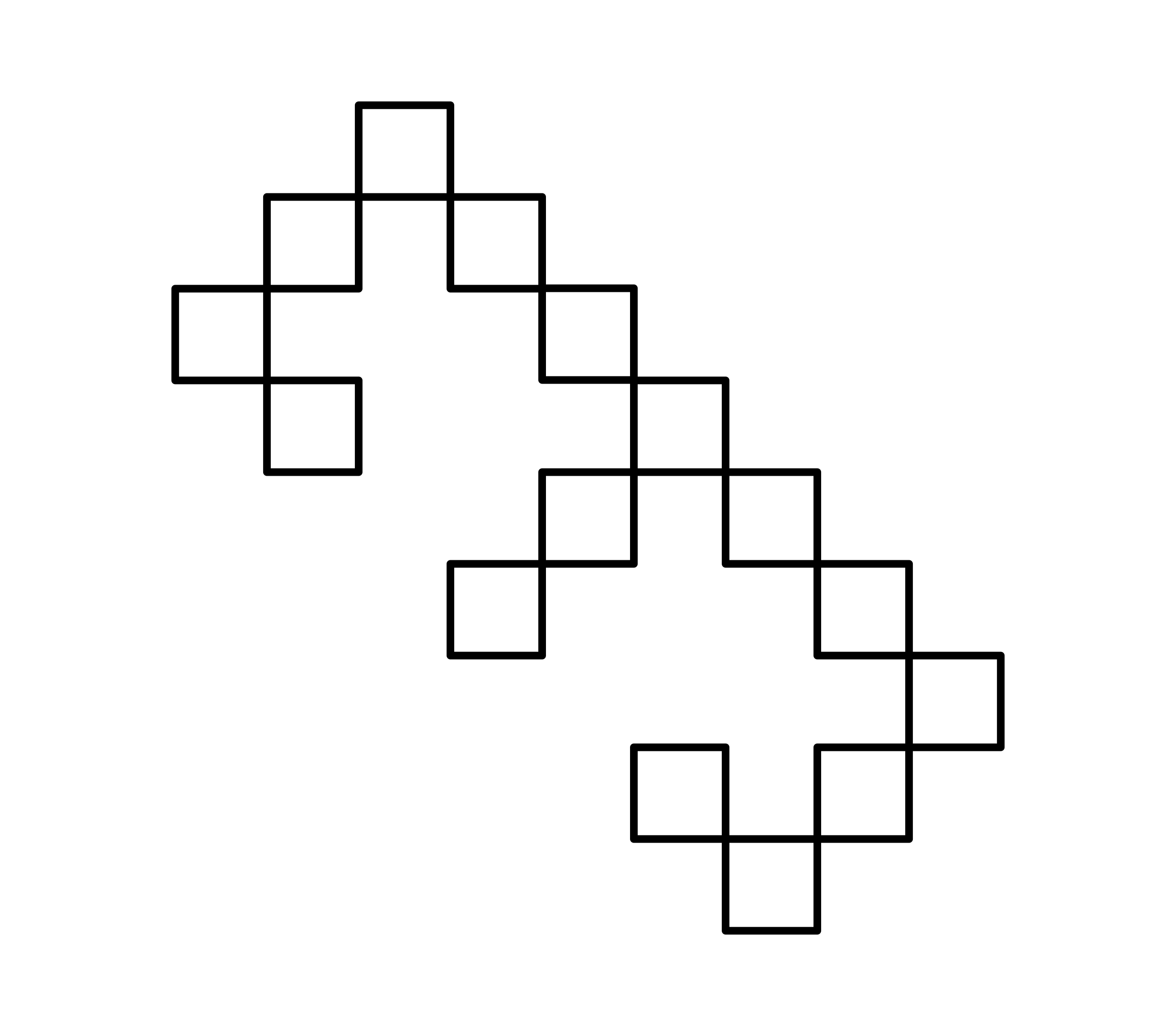
By combining the orthogonal straight-line sweep of the Rook with the diagonal laser-vision of the Bishop, a single centralized Queen can control up to 27 squares simultaneously.
8-Directional Movement
A Queen can move across any number of unoccupied squares in all eight compass directions:
       ↖  ▲  ↗
       ◄ [♕] ►
       ↙  ▼  ↘
The Queen cannot jump over other pieces. If friendly pieces or enemy pieces block her line of sight, her movement stops on that line.
”Queen on Her Color”: The Golden Setup Rule
When setting up the board before a game starts:
- White Queen sits on the white square (
d1). - Black Queen sits on the black square (
d8).
Remember the timeless chess setup mnemonic: “The Queen always dresses to match her shoes (Queen on her own color).”
The Danger of the Early Queen Attack
Beginner players frequently try to win games instantly by rushing their Queen out on moves 2 or 3 (such as trying for the Scholar’s Mate).
Against knowledgeable opponents, this is a severe positional blunder:
- Every time a low-value Knight (3 pts) or Bishop (3 pts) attacks your Queen (9 pts), you must retreat her.
- While you waste 3–4 moves running your Queen around the board, your opponent develops their entire army and seizes central control.
For experienced players
Keep your Queen safely in reserve during the first few moves. Develop your Knights, Bishops, and castle your King first; then bring your Queen out to deliver the decisive blow.
See also:Checkmate·How the Rook Moves·How the Bishop Moves·Pawn Promotion