


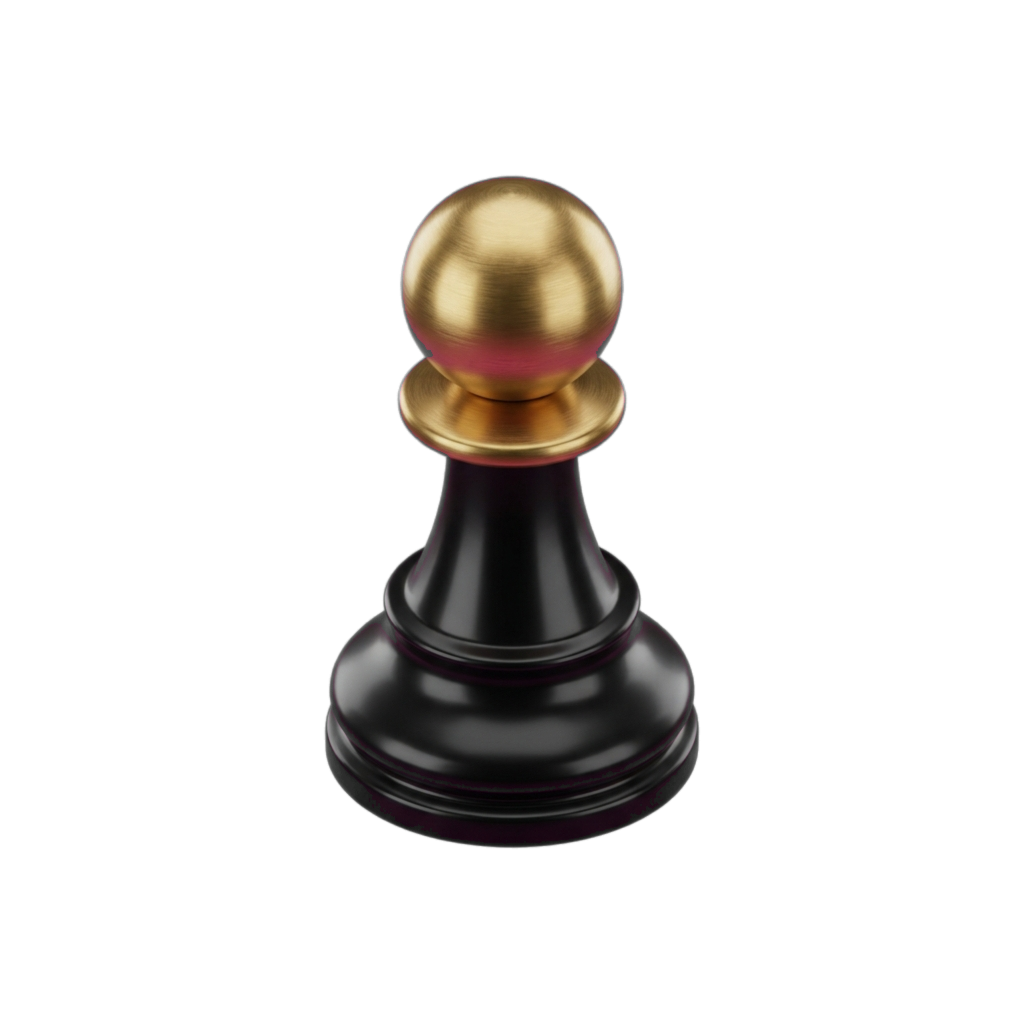









Pawn Promotion is one of the most rewarding rules in chess. It rewards the patient, strategic journey of the humblest piece on the board: when a pawn successfully reaches the far side of the board (the 8th rank for White, or the 1st rank for Black), it immediately evolves into a more powerful piece.
The transformation takes effect instantly on that exact square as part of the move.
Promotion Choices
You may choose to promote your pawn into any of the following four pieces:
♕ Queen  : Valued at 9 points (the standard choice in ~97% of games).
♘ Knight : Valued at 3 points (unique jumping attack; ideal for forks & checks).
♖ Rook   : Valued at 5 points (used primarily to avoid stalemate traps).
♗ Bishop : Valued at 3 points (very rare; occasionally used in puzzle compositions).
You cannot promote to a King, and you cannot leave the piece as a pawn.
Multiple Queens & Over-the-Board Etiquette
A common beginner myth is that you can only promote to a piece that your opponent has already captured. This is completely false.
Under official FIDE rules, you can promote to a second (or third) Queen even if your original Queen is still on the board. In tournament chess, if a physical second Queen is not immediately next to the board, you may stop the chess clock and summon the arbiter to provide an additional Queen piece.
The Art of “Underpromotion”
Promoting to a piece other than a Queen is called Underpromotion. While rare, it is essential in two distinct scenarios:
- Avoiding Accidental Stalemate: When promoting to a Queen would control all escape squares and cause an immediate stalemate draw, promoting to a Rook or Bishop gives the enemy King room to move while still maintaining a forced checkmate.
- Immediate Knight Forks: Because Knights leap in unique L-shapes, promoting to a Knight can deliver an immediate royal fork or check that a Queen cannot.
For experienced players
In chess notation, promotion is written with an equals sign followed by the piece letter (e.g., e8=Q+, a8=N#, or d1=R).
See also:How the Pawn Moves·How the Queen Moves·En Passant·Stalemate